
Family resources · Research made simple
Agitation in dementia: check these before another pill
When Mom starts pacing, yelling, or pushing away help, it’s usually a message. As words get harder, behavior is often how someone tells you something is wrong.
Check these first
- Pain. Arthritis, teeth, constipation, a fall she didn’t mention.
- Hunger or thirst.
- Bathroom. Needing to go, or being constipated.
- Too much going on. Noise, crowds, TV, too many people talking at once.
- Boredom. Nothing to do with her hands or her day.
- Tiredness, especially late in the day.
- A new medicine, or a possible infection. That one’s a call to her doctor.
What the research says
Treating pain helps. In a study of 352 nursing home residents with dementia, giving pain medicine on a regular schedule for 8 weeks cut agitation by 17% compared with usual care. (Husebo and colleagues, BMJ, 2011.)
Non-drug approaches often work better than medication. A 2019 review of 163 studies and more than 23,000 people found that non-drug approaches seemed to work better than medicines for agitation and aggression. Massage and gentle touch, music paired with touch, and a coordinated care team all did better than usual care. Time outdoors did better than antipsychotic medicine for physical aggression. (Watt and colleagues, Annals of Internal Medicine, 2019.)
Medicine still has a place. But antipsychotic drugs carry an FDA boxed warning for older adults with dementia, and geriatric guidelines recommend trying non-drug options first.
A good question for any doctor
“What else could be causing this?”
It’s a fair question, and a good clinician will be glad you asked it.
Sources
- Husebo BS, et al. Efficacy of treating pain to reduce behavioural disturbances in residents of nursing homes with dementia. BMJ 2011;343:d4065. Read it
- Watt JA, et al. Comparative efficacy of interventions for aggressive and agitated behaviors in dementia. Annals of Internal Medicine 2019;171:633-642. Read it
- Kales HC, Gitlin LN, Lyketsos CG. Assessment and management of behavioral and psychological symptoms of dementia. BMJ 2015. Read it
Why it shapes how we build
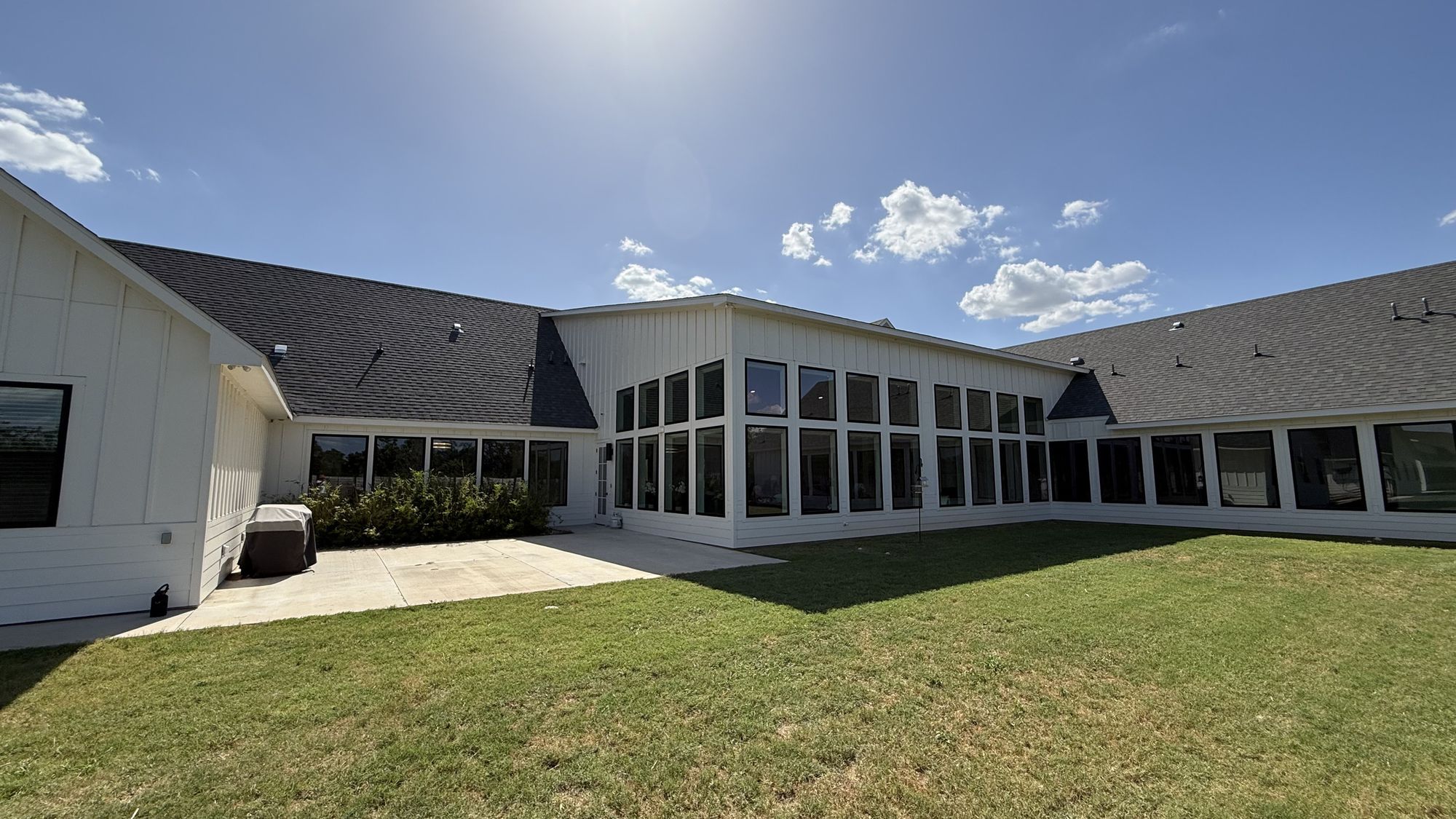
Everlight’s design has an enclosed courtyard so residents can be outside on their own and stay safe. A small household makes it easier to notice when someone is hurting or just off today. Those choices come straight from research like this.
Save the checklist.
And send it to someone who is caring for a parent right now.